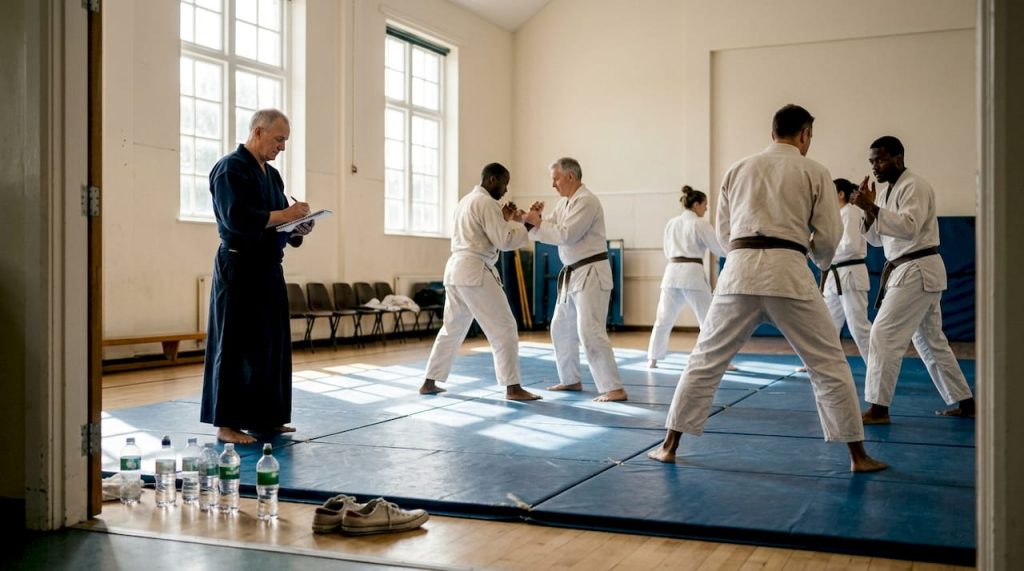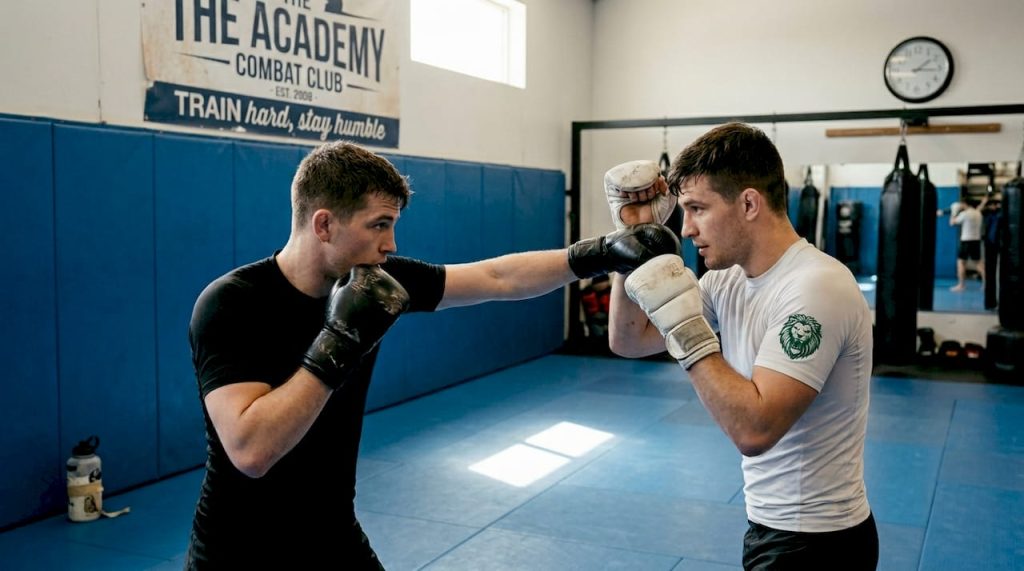
Many martial arts enthusiasts believe any sparring partner will do, that showing up and exchanging techniques is enough for progress. This assumption overlooks a critical truth: the quality and compatibility of your sparring partners directly shape your skill development, safety, and long-term success in disciplines like BJJ, Muay Thai, and MMA. Choosing the wrong partners can embed bad habits, increase injury risk, and stall your growth. This guide explores why sparring partner selection matters deeply, how to identify ideal training partners in Kuala Lumpur, and practical strategies to balance sparring intensity for optimal results whilst protecting your health.
Table of Contents
- Understanding Sparring Partner Roles In Martial Arts Training
- The Nuances Of Sparring Partner Variety And Load Management
- Finding And Training With The Right Sparring Partners In Kuala Lumpur
- Comparing Sparring Partner Types And Their Impact On Your Progress
- Enhance Your Martial Arts Journey With Monarchy MMA In Kuala Lumpur
Key takeaways
| Point | Details |
|---|---|
| Partner quality affects progress | The right sparring partners accelerate skill development whilst maintaining safety and proper technique. |
| Mismatch creates risks | Training with incompatible partners leads to injury, bad habits, and insufficient pressure testing of skills. |
| Variety simulates reality | Diverse partner styles prepare you for unpredictable opponents and real fight scenarios. |
| Over-sparring damages health | Excessive sparring causes cumulative brain trauma; balance intensity with recovery and drills. |
| Local gyms provide structure | Kuala Lumpur facilities like Monarchy MMA offer safe environments with compatible partners across skill levels. |
Understanding sparring partner roles in martial arts training
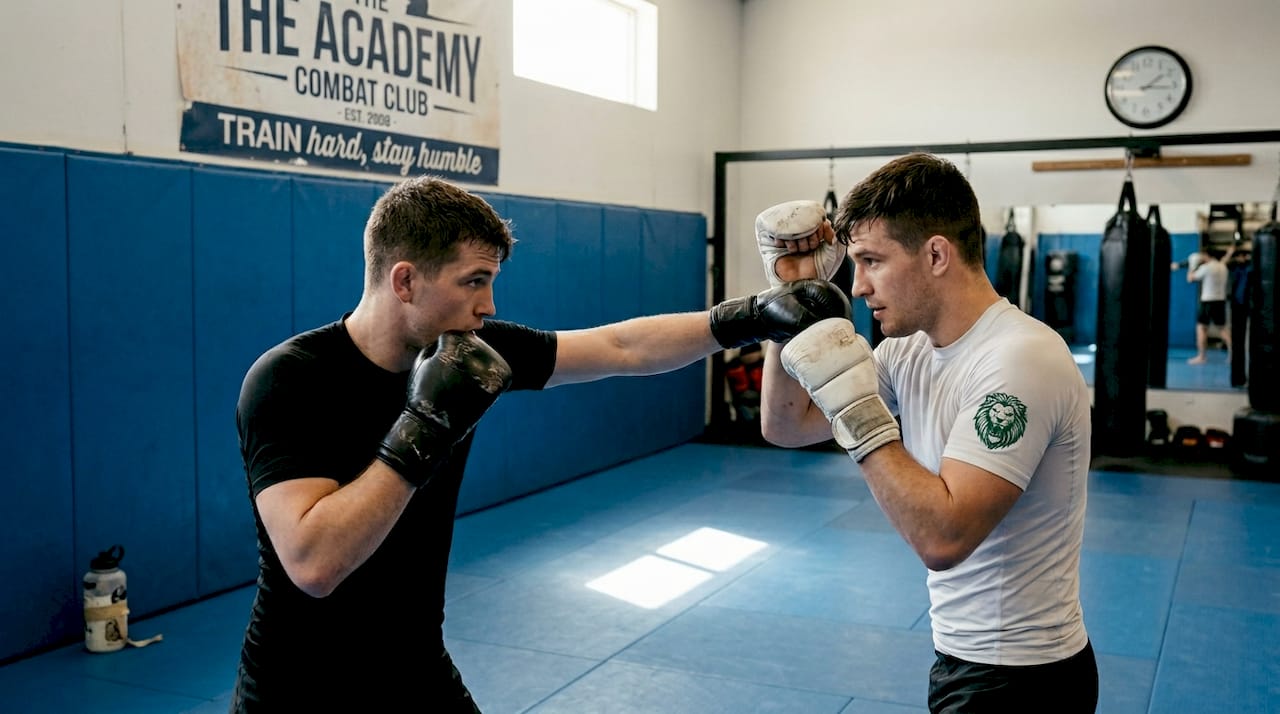
Sparring serves as the bridge between drilling techniques and applying them under realistic pressure. When you practise with the right partner, you develop timing, reaction speed, and the ability to execute moves against resistance. Your sparring partner becomes your testing ground for strategy, forcing you to adapt techniques in real time whilst managing adrenaline and fatigue. This pressure testing reveals gaps in your game that shadowboxing or pad work cannot expose.
The danger emerges when skill levels mismatch significantly. Sparring with mismatched partners risks bad habits, lack of proper pressure testing, and injuries ranging from minor bruises to serious trauma. A partner who cannot challenge your defence lets you develop false confidence in techniques that stronger opponents will exploit. Conversely, training exclusively with far superior partners can overwhelm you, preventing skill consolidation and damaging confidence.
Training occasionally with less experienced partners offers specific benefits when approached correctly. You refine technique by slowing down, focusing on precision rather than power, and identifying mechanical flaws in your movements. Teaching moments arise naturally as you guide newer practitioners, which deepens your own understanding. However, these sessions should complement rather than replace challenging sparring that pushes your limits.
Pro Tip: Rotate between three partner types weekly: one slightly better than you for growth, one at your level for competitive exchanges, and one less experienced for technical refinement. This rotation prevents stagnation whilst building well-rounded skills.
The physiological benefits of quality sparring extend beyond technique. Your cardiovascular system adapts to the unique demands of fighting, where explosive bursts alternate with strategic positioning. Sparring develops the specific endurance needed to maintain technique under fatigue, a critical factor separating skilled practitioners from those who crumble in later rounds. Your nervous system learns to process threats faster, improving reaction times that translate across all martial arts contexts.
Recognising traits of poor sparring partners protects your training investment. Partners who ignore agreed intensity levels, refuse to tap or acknowledge strikes, or lack basic control create dangerous environments. These individuals prioritise ego over mutual improvement, turning productive sessions into survival exercises. Understanding why sparring matters helps you articulate boundaries and seek partners who share your commitment to safe, progressive training.
The nuances of sparring partner variety and load management
Advanced practitioners understand that partner diversity directly impacts fight readiness. Sparring load affects reaction time more significantly in the weeks preceding competition, making strategic partner selection crucial during peak training phases. Technical partners who emphasise timing and precision sharpen your defensive awareness, whilst aggressive partners who pressure relentlessly build your ability to perform under stress. This variety simulates the unpredictable nature of real opponents who may switch styles mid-fight.
Consider these partner archetypes and their training applications:
- The technical specialist forces you to tighten defensive gaps and rewards precise counter-striking
- The pressure fighter develops your composure under relentless attacks and tests your conditioning
- The strategic tactician challenges your fight IQ and ability to adapt game plans mid-session
- The unorthodox stylist exposes you to unusual angles and rhythms that conventional training misses
Balancing sparring intensity requires honest assessment of your recovery capacity and training goals. Excessive and uncontrolled sparring represents boxing’s secret killer through cumulative brain trauma that compounds over years. Each hard sparring session deposits neurological stress that requires adequate recovery time to process. Ignoring these recovery needs accelerates cognitive decline and increases vulnerability to serious injury.
“The fighters who train hardest don’t always achieve the most success. Those who train smartest, balancing intensity with recovery, build sustainable careers whilst protecting their long-term health.”
Pre-competition training demands particular attention to sparring load management. Increasing sparring frequency and intensity too close to fight day leaves you depleted rather than peaked. Strategic coaches programme hard sparring sessions 10 to 14 days before competition, then taper to technical work that maintains sharpness without accumulating fatigue. This approach keeps reflexes sharp whilst ensuring full recovery for performance day.
Drills and controlled partner work should comprise 60 to 70 percent of your training volume, with sparring filling the remaining portion. This ratio allows sufficient repetition to ingrain techniques whilst preserving your body for the realistic application sparring provides. Recovery protocols including proper sleep, nutrition, and active rest days become non-negotiable components of sustainable training. Preparing properly for martial arts competition requires this holistic approach to training load management.
Finding and training with the right sparring partners in Kuala Lumpur
Kuala Lumpur’s martial arts community offers diverse options for connecting with compatible training partners. Gyms like Monarchy MMA provide structured BJJ, Muay Thai, and MMA classes with experienced coaches who facilitate safe sparring amongst members across multiple locations. These established facilities attract practitioners at various skill levels, creating natural opportunities to find partners who match your goals and experience.
Structured classes deliver significant advantages over informal training arrangements. Qualified instructors monitor sparring sessions, intervening when intensity escalates beyond agreed parameters or when technical errors create injury risks. The class format naturally groups students by experience level, though cross-training between groups under supervision accelerates learning. Regular attendance builds familiarity with training partners, establishing trust and communication that enhances session quality.
| Gym Feature | Training Benefit | Safety Impact |
|---|---|---|
| Qualified coaching | Technique correction during live sparring | Immediate intervention prevents dangerous situations |
| Structured curriculum | Progressive skill development with appropriate partners | Reduces mismatch injuries |
| Multiple locations | Access to diverse training partners and styles | Broader exposure to different approaches |
| Equipment standards | Proper protective gear and maintained facilities | Minimises preventable injuries |
Identifying compatible sparring partners within your gym requires attention to several factors. Skill level compatibility ensures challenging but not overwhelming sessions. Style compatibility matters less than you might expect, diverse styles provide valuable exposure, but communication style proves critical. Partners who discuss goals before sessions, agree on intensity levels, and provide constructive feedback create productive training environments.
Pro Tip: Before sparring with a new partner, spend five minutes discussing your respective goals for the session. Agree explicitly on intensity level, specific techniques to focus on, and signals for reducing pace if needed. This brief conversation prevents most sparring conflicts.
Practical steps for building your sparring partner network include:
- Attend adult martial arts classes consistently to build familiarity with regular members
- Introduce yourself to practitioners at your skill level after class and propose future sparring sessions
- Participate in open mat sessions where informal sparring occurs outside structured class times
- Join gym social media groups to coordinate additional training sessions
- Communicate your training goals clearly so partners understand your needs
Setting specific sparring goals transforms sessions from random exchanges into targeted skill development. Perhaps you need to improve your takedown defence against wrestlers, or test your newly developed combination against resisting opponents. Communicating these goals lets partners provide appropriate resistance and feedback. Proper conditioning for martial arts ensures you arrive at sparring sessions prepared to execute techniques without excessive fatigue compromising form.
Comparing sparring partner types and their impact on your progress
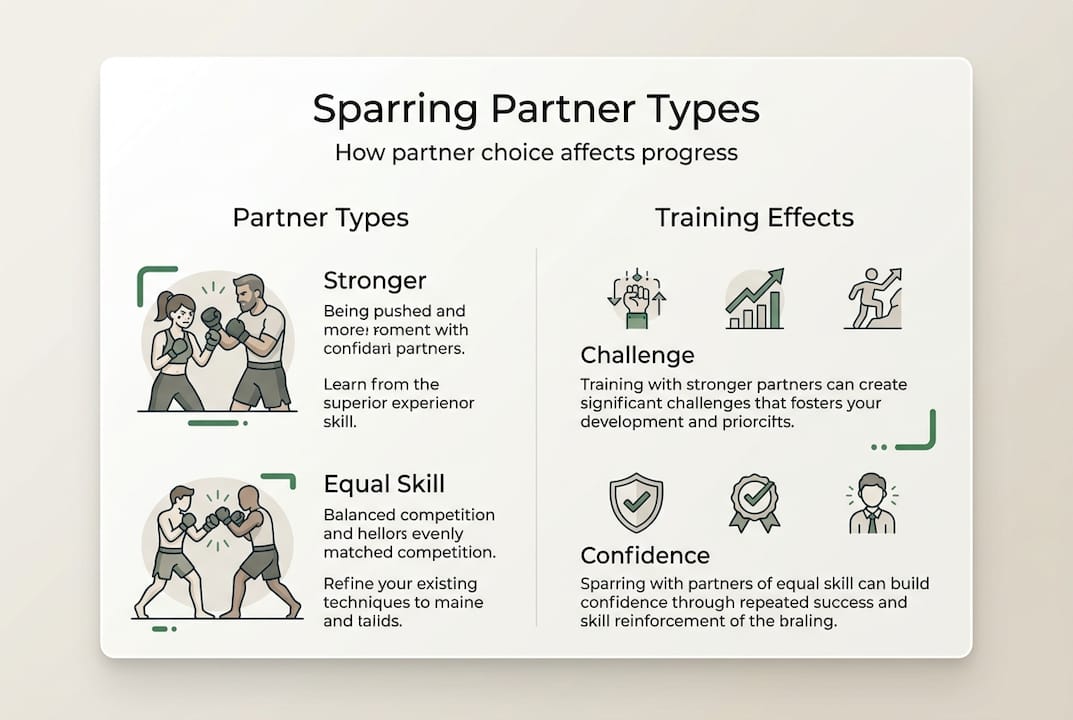
Different partner profiles serve distinct training purposes. Understanding these archetypes helps you strategically select partners based on current development needs. The table below compares common sparring partner types:
| Partner Type | Key Characteristics | Primary Benefits | Potential Drawbacks | Ideal Usage Frequency |
|---|---|---|---|---|
| Significantly stronger | Superior skill, size, or experience | Exposes defensive gaps, builds toughness | Can overwhelm and prevent technique practice | Once weekly |
| Equal skill level | Matched abilities and experience | Competitive exchanges, realistic fight simulation | May reinforce existing patterns | 2 to 3 times weekly |
| Less experienced | Lower skill or newer to discipline | Technical refinement, teaching deepens understanding | Limited pressure testing if overused | Once weekly |
| Aggressive style | High pressure, constant forward movement | Stress inoculation, conditioning under duress | Injury risk if uncontrolled | Sparingly, with trusted partners |
| Technical style | Precise, controlled, strategic approach | Timing development, defensive awareness | May lack realistic fight intensity | 2 to 3 times weekly |
Training with stronger partners requires specific adjustments to maximise benefit. Focus on defensive survival, movement efficiency, and identifying brief offensive windows rather than trying to dominate exchanges. These sessions reveal which techniques hold up under pressure and which crumble against superior opposition. Accept that you will be on the defensive more, using this as an opportunity to sharpen your guard, footwork, and counter-striking.
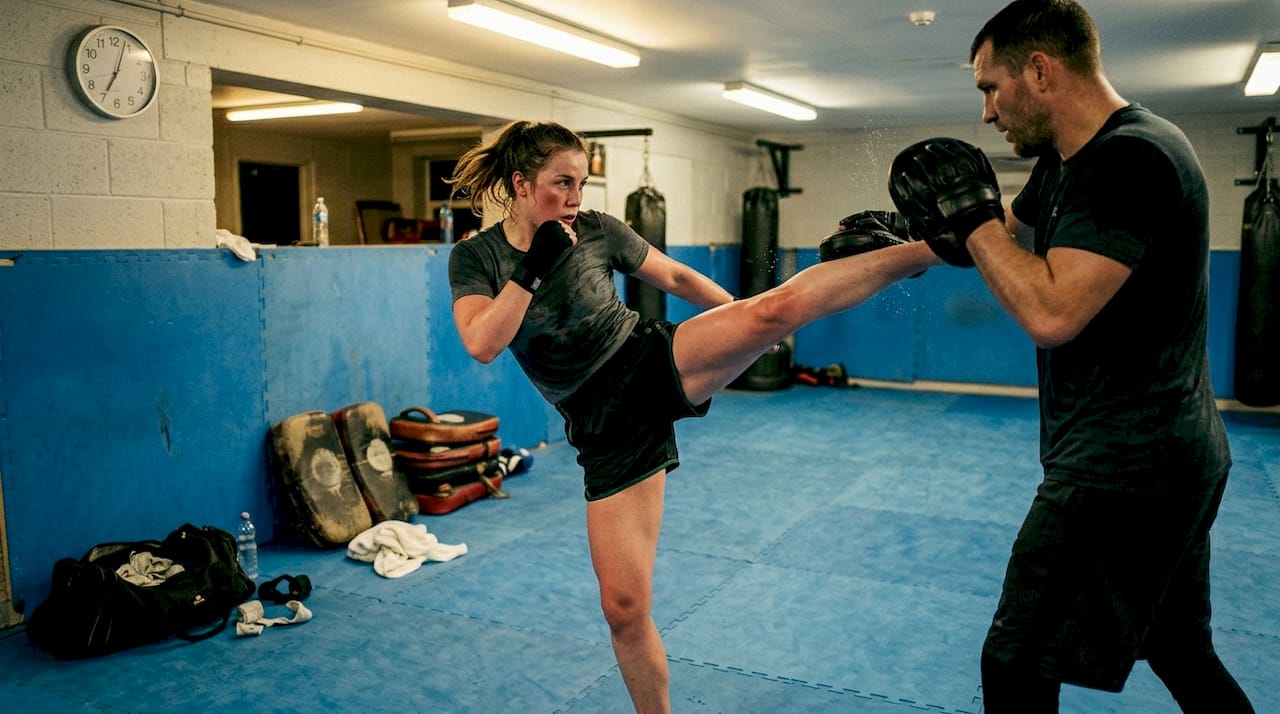
Equally skilled partners provide the most realistic fight simulation. These sessions should feel competitive but controlled, pushing both practitioners to execute techniques under genuine resistance. The back and forth nature develops your ability to chain techniques, transition between offence and defence, and manage the psychological pressure of evenly matched combat. These partners often become long-term training relationships that evolve as both practitioners improve.
Sparring with mismatched partners who are significantly weaker risks developing bad habits if overused. When opponents cannot threaten your defence, you may become lazy with hand position, footwork, or head movement. These technical degradations become ingrained patterns that stronger opponents will exploit. Use these sessions specifically for technical refinement, slowing down to perfect mechanics whilst maintaining proper form.
Warning signs of negative sparring experiences include:
- Consistent injuries that exceed normal training wear
- Partners who ignore agreed intensity levels or refuse to acknowledge strikes
- Feeling anxious or unsafe rather than appropriately challenged
- Lack of improvement despite regular sparring
- Partners who turn sessions into ego battles rather than mutual development
Recognising poor sparring partner traits early prevents wasted training time and potential injuries. Trust your instincts when a partner’s behaviour feels unsafe or counterproductive. Quality gyms support members who raise concerns about incompatible training partners, facilitating alternative pairings that better serve everyone’s development.
Enhance your martial arts journey with Monarchy MMA in Kuala Lumpur
Finding the right sparring partners transforms from challenge to opportunity when you train within a structured, professional environment. Monarchy MMA operates multiple locations across Kuala Lumpur, each staffed with experienced coaches who facilitate safe, productive sparring across BJJ, Muay Thai, and MMA disciplines. The diverse membership base ensures you will find compatible partners regardless of your current skill level or specific martial arts focus.

Whether you prefer the collaborative atmosphere of group adult martial arts classes or the personalised attention of private martial arts lessons, Monarchy MMA structures training to accelerate your progress safely. The coaching staff actively monitors sparring sessions, ensuring intensity remains appropriate whilst providing real-time feedback on technique. New students benefit from introductory programmes that build foundational skills before progressing to live sparring, whilst experienced practitioners find training partners who challenge their abilities. Explore the Monarchy MMA gym locations throughout Kuala Lumpur to find the facility most convenient for your schedule and begin training with Kuala Lumpur’s martial arts community.
FAQ
What should I look for in a sparring partner?
Prioritise partners who balance challenging your skills whilst maintaining agreed safety standards. Look for individuals who communicate clearly about session goals, respect intensity agreements, and provide constructive feedback. Reliability matters significantly, consistent attendance builds the familiarity that makes sparring productive. Style compatibility proves less important than communication compatibility and mutual respect for each other’s development.
Can sparring cause long-term injuries?
Yes, particularly from repeated head impacts that accumulate over time. Excessive and uncontrolled sparring causes cumulative brain trauma and long-term neurological damage that may not manifest for years. Balance sparring frequency with adequate recovery periods and prioritise technical drilling for skill development. Use appropriate protective equipment, agree on intensity levels before sessions, and immediately address partners who disregard safety protocols.
How can I find sparring partners near me in Kuala Lumpur?
Join established martial arts gyms in Kuala Lumpur like Monarchy MMA that offer structured classes where you will naturally meet compatible training partners. Attend consistently to build relationships with regular members who share your training goals. Participate in open mat sessions, seminars, and workshops that attract practitioners from across the city. Engage with local martial arts social media groups and forums where members coordinate additional training sessions outside formal class times.
What is the ideal balance between sparring and drills?
Allocate approximately 60 to 70 percent of training time to drills, technique work, and controlled partner exercises, reserving the remainder for live sparring. Balancing sparring with skill drills and adequate recovery minimises cumulative trauma whilst maximising performance improvements. Limit hard sparring sessions to once or twice weekly, using lighter technical sparring for additional live practice. Increase sparring frequency strategically before competitions, then reduce volume during recovery phases to allow neurological and physical systems to adapt.
Recommended
- 6 Traits You Don’t Want in a Sparring Partner – Monarchy MMA
- Why Spar? – Monarchy MMA
- Why Strength & Conditioning is a Game-Changer for Martial Artists – Monarchy MMA
- Can Women Be Successful In Martial Arts? – Monarchy MMA