
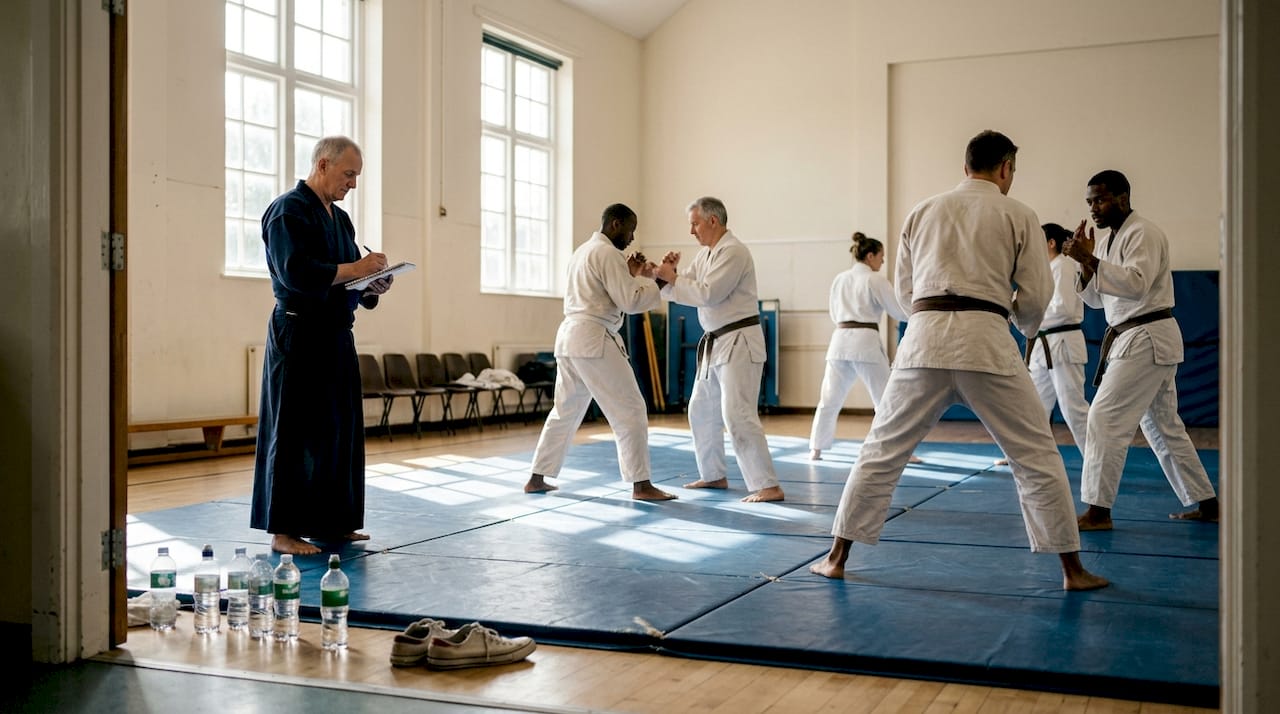
Many people assume martial arts training is purely about fighting or self-defence, but this overlooks the profound mental and physical benefits that transform lives. Research demonstrates that martial arts significantly improve emotional regulation, attention, and stress resilience whilst building practical fitness and confidence. For individuals in Kuala Lumpur seeking empowerment, martial arts offer a comprehensive path to mental clarity, physical strength, and personal growth. This article explores the evidence-based benefits specifically relevant to beginners, fitness enthusiasts, and parents considering structured classes for their children.
Table of Contents
- Key takeaways
- Mental benefits of training martial arts
- Physical empowerment and self-defence benefits for adults in Kuala Lumpur
- Why martial arts training benefits children’s behaviour and development
- Popular martial arts styles in Kuala Lumpur and safety considerations
- Start your martial arts journey in Kuala Lumpur with expert guidance
- Frequently asked questions
Key Takeaways
| Point | Details |
|---|---|
| Mental health gains | Randomised controlled trials show martial arts improve emotional regulation, attention and stress resilience, with benefits including better sleep and mood. |
| Attention and calm | Regular training enhances concentration and the ability to stay calm under pressure, supporting daily life and work. |
| Taekwondo for women | Taekwondo improves cardiovascular fitness, flexibility and self defence, contributing to a better quality of life. |
| Daily life fitness | Training builds practical fitness and coordination that support everyday tasks and reduce injury risk. |
Mental benefits of training martial arts
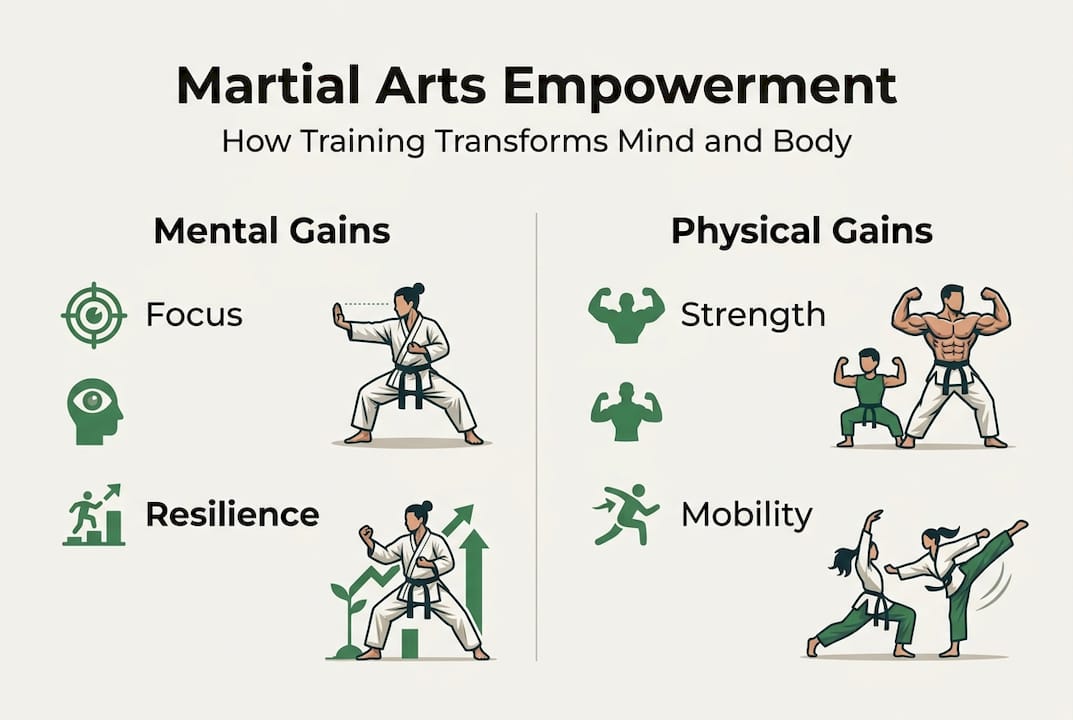
Martial arts training delivers remarkable mental health improvements that extend far beyond the gym. Recent randomised controlled trials demonstrate that martial arts outperform conventional exercise in improving emotional control, attention, and stress resilience. Participants showed a 0.92-point improvement on the Emotion Regulation Questionnaire after just eight weeks of training, alongside enhanced reaction times and psychological resilience. These gains directly translate to better stress management in daily life, particularly valuable for navigating the demands of work and family in busy Kuala Lumpur.
The mental skills you develop through martial arts create lasting changes in how you process emotions and respond to challenges. Training requires constant focus, whether you’re perfecting a technique or sparring with a partner, which strengthens your attention span and concentration. The controlled environment of martial arts classes teaches you to remain calm under pressure, regulate emotional responses, and build confidence through progressive skill mastery. These capabilities prove invaluable when facing workplace stress, personal conflicts, or unexpected setbacks.
Consistency amplifies these benefits significantly. Training three times weekly for 60-minute sessions produces optimal results, allowing your brain to form new neural pathways whilst providing adequate recovery. The combination of physical exertion and mental discipline creates a powerful antidote to anxiety and depression. Many practitioners report improved sleep quality, reduced rumination, and greater emotional stability within weeks of starting regular martial arts classes.
Pro Tip: Track your emotional state before and after training sessions for the first month. You’ll notice patterns showing how martial arts practice reduces stress and improves mood, which reinforces your commitment to consistent training.
The structured progression in martial arts also builds self-efficacy, the belief in your ability to achieve goals. Each belt earned or technique mastered provides concrete evidence of your growth, creating a positive feedback loop that enhances mental resilience. This psychological empowerment extends beyond training, influencing how you approach challenges in all areas of life. The discipline required to master complex techniques teaches patience and persistence, qualities that serve you well in personal and professional pursuits.
Physical empowerment and self-defence benefits for adults in Kuala Lumpur
Martial arts training transforms your physical capabilities whilst building practical self-defence skills applicable to real-world situations. Research shows that Taekwondo improves quality of life and self-defence skills for women with significant health gains, including enhanced cardiovascular fitness, flexibility, and muscular strength. The physical demands of training create functional fitness that improves daily activities, from carrying groceries to climbing stairs, whilst reducing injury risk through better body awareness and coordination.
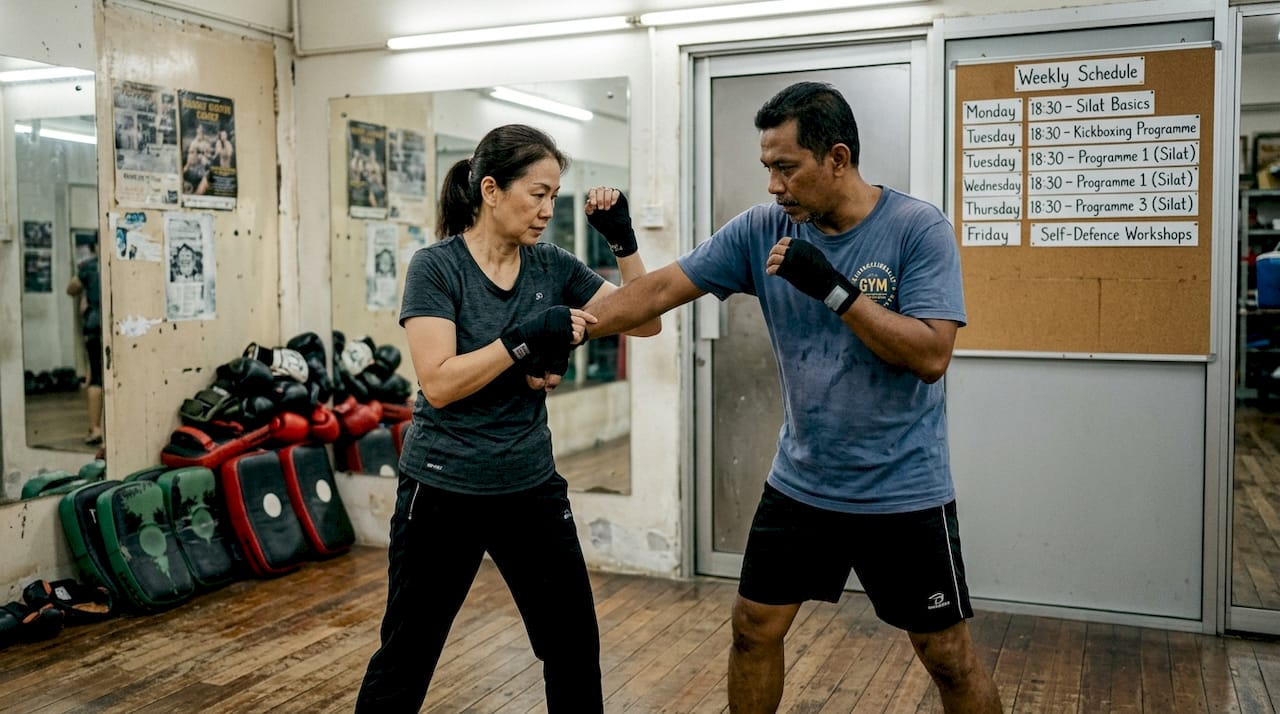
Popular martial arts styles in Kuala Lumpur offer distinct approaches suited to different preferences and goals. Brazilian Jiu-Jitsu focuses on leverage and technique, allowing smaller practitioners to control larger opponents through ground fighting and submissions. Muay Thai emphasises striking with fists, elbows, knees, and shins, developing explosive power and cardiovascular endurance. Both styles welcome beginners and provide self-defence and fitness options through structured progression that builds confidence alongside skill.
| Martial art | Primary focus | Beginner friendly | Physical demands | Self-defence application |
|---|---|---|---|---|
| Brazilian Jiu-Jitsu | Grappling, submissions | High | Moderate intensity, technical | Excellent for close-range defence |
| Muay Thai | Striking, clinch work | High | High intensity, cardiovascular | Effective stand-up defence |
| Taekwondo | Kicking, forms | Very high | Moderate to high, flexibility | Good distance management |
| Boxing | Punching, footwork | High | High intensity, upper body | Strong striking fundamentals |
The empowerment gained through martial arts extends beyond physical capability to psychological confidence. Knowing you can defend yourself changes how you move through the world, reducing anxiety in potentially threatening situations. This confidence isn’t about aggression but about calm self-assurance rooted in genuine skill. Adult martial arts classes provide safe environments to develop these abilities progressively, ensuring proper technique before advancing to more challenging scenarios.
Pro Tip: Start with beginner classes that emphasise fundamental techniques and safety protocols. Rushing into advanced training increases injury risk and builds poor movement patterns that require correction later.
Women particularly benefit from martial arts training that addresses specific self-defence scenarios whilst building physical and mental strength. The combination of technique, fitness, and confidence creates comprehensive empowerment that influences all aspects of life. Many women in martial arts report feeling more assertive in professional settings and more secure in daily activities. The supportive community found in quality gyms provides additional motivation and accountability, making it easier to maintain consistent training that produces lasting results.
Why martial arts training benefits children’s behaviour and development
Martial arts training provides structured environments where children develop essential life skills alongside physical capabilities. Meta-analyses reveal that children’s martial arts leads to enhanced prosocial behaviour and reduced aggression in optimally timed programmes, with specific training durations producing the best outcomes. Children who train martial arts show improved cooperation, empathy, and conflict resolution skills compared to peers in other activities, whilst simultaneously reducing aggressive tendencies and improving emotional regulation.
The discipline inherent in martial arts training teaches children to follow instructions, respect authority, and persist through challenges. These lessons transfer directly to academic performance and social interactions. Children learn that success requires consistent effort rather than instant gratification, a crucial lesson in our age of digital distraction. The belt system provides clear milestones that reward dedication, teaching goal-setting and the satisfaction of earned achievement. Many parents notice improved focus, better grades, and enhanced self-control at home after their children begin kids martial arts classes.
| Training factor | Optimal range | Behavioural benefit | Consideration |
|---|---|---|---|
| Class duration | 45-60 minutes | Maintains engagement without fatigue | Shorter for younger children |
| Weekly frequency | 2-3 sessions | Balances skill development and recovery | More than 4 increases injury risk |
| Programme length | 12+ weeks | Allows habit formation and measurable gains | Benefits increase with consistency |
| Class size | 8-15 students | Enables individual attention and peer learning | Too small limits social benefits |
The social environment of martial arts classes provides valuable peer interaction within structured boundaries. Children learn to work with partners of different sizes, ages, and skill levels, building empathy and adaptability. The non-competitive nature of many martial arts styles, particularly in beginner classes, reduces performance anxiety whilst building confidence. Children experience success through personal progress rather than comparison to others, fostering healthy self-esteem rooted in genuine capability.
Pro Tip: Monitor your child’s training load carefully. More than four sessions weekly or participation in multiple high-intensity sports simultaneously increases overuse injury risk. Quality training beats quantity for long-term development.
Parents seeking structured programmes for their children should prioritise gyms with experienced instructors who understand child development. Quality martial arts for children emphasises character development alongside physical skill, creating well-rounded individuals prepared for life’s challenges. The combination of physical activity, mental discipline, and social learning makes martial arts uniquely effective for childhood development, producing benefits that extend far beyond the training mat.
Popular martial arts styles in Kuala Lumpur and safety considerations
Kuala Lumpur offers diverse martial arts styles, each with unique characteristics suited to different goals and preferences. Silat Kuntau Tekpi represents Malaysia’s martial heritage, emphasising defence and spiritual growth through movements that blend physical technique with cultural philosophy. This traditional style teaches practitioners to use minimal force for maximum effect whilst developing mental discipline and respect for opponents. Brazilian Jiu-Jitsu and Muay Thai provide more contemporary options, offering beginner-friendly approaches to self-defence and fitness through structured curriculum and progressive skill development.
Understanding injury risks helps you train safely whilst maximising benefits. Research shows that injury rates vary by martial art style and training intensity, with proper supervision crucial to reduce risks. Common injuries include contusions, sprains, and fractures, typically linked to training hours, competition participation, and inadequate warm-up or cool-down protocols. Youth face higher injury risk due to developing bodies and sometimes excessive training loads, requiring monitored schedules that balance skill development with adequate recovery.
| Risk factor | Impact level | Affected styles | Prevention strategy |
|---|---|---|---|
| High training intensity | Moderate to high | Muay Thai, kickboxing | Gradual progression, adequate rest |
| Competition participation | High | All competitive styles | Proper preparation, weight management |
| Insufficient supervision | High | All styles | Choose reputable gyms with qualified instructors |
| Excessive weekly hours | Moderate | All styles, especially youth | Limit to 3-4 sessions weekly |
| Poor technique | Moderate to high | All styles | Prioritise fundamentals before advancing |
Experts emphasise that benefits generally outweigh risks when training follows proper protocols. As one experienced practitioner notes:
The key to safe martial arts training lies in respecting your body’s limits, following qualified instruction, and progressing gradually. Benefits generally outweigh risks if training is structured and injury prevention observed through proper warm-ups, technique focus, and adequate recovery between sessions.
Pro Tip: Prioritise gyms that emphasise technique over intensity for beginners. Learning proper form prevents injuries and builds a strong foundation for advanced training. Never skip warm-ups or cool-downs, as these prepare your body for exertion and promote recovery.
Choosing the right gym significantly impacts your training experience and safety. Quality facilities provide experienced instructors, appropriate equipment, and class structures that separate beginners from advanced students. Private martial arts classes offer personalised instruction that addresses individual needs and concerns, particularly valuable for those with previous injuries or specific goals. Multiple martial arts gyms in Kuala Lumpur provide convenient access to quality training, making it easier to maintain the consistency required for optimal results.
Start your martial arts journey in Kuala Lumpur with expert guidance
Transforming your life through martial arts begins with choosing the right training environment. Monarchy MMA offers comprehensive adult martial arts classes across multiple Kuala Lumpur locations, providing structured programmes that build mental resilience, physical fitness, and practical self-defence skills. Experienced instructors guide you through progressive curriculum designed for beginners whilst challenging advanced students, creating an inclusive environment where everyone can achieve their goals safely and effectively.

Families seeking structured development for children find age-appropriate kids martial arts classes that emphasise character building alongside physical skill. Free trial classes allow you to experience different martial arts styles before committing, ensuring you find the perfect fit for your goals and preferences. For personalised attention and accelerated progress, private martial arts classes provide one-on-one instruction tailored to your specific needs, whether you’re building confidence, preparing for competition, or addressing particular challenges.
Frequently asked questions
What are the mental health benefits of martial arts training?
Martial arts training significantly improves emotional regulation, attention span, and stress resilience through structured practice that challenges both mind and body. Research demonstrates larger gains compared to conventional exercise, with measurable improvements appearing within eight weeks of consistent training. The mental discipline developed through martial arts creates lasting changes in how you process emotions and respond to daily challenges.
Which martial arts style is best for beginners in Kuala Lumpur?
Brazilian Jiu-Jitsu and Muay Thai both offer excellent options for beginners, with structured instruction that builds skills progressively whilst emphasising safety. Choose based on your preference for grappling versus striking, as both styles provide effective self-defence and fitness benefits. Quality martial arts classes for beginners ensure proper technique development before advancing to more challenging training.
How safe is martial arts training for children?
Martial arts training is generally safe for children when programmes limit weekly hours to three or four sessions and prioritise technique over intensity. Injury risk increases with excessive training loads and competition participation, particularly in developing bodies. Optimal training duration improves behaviour whilst minimising injury risk. Choose reputable children’s martial arts classes with experienced instructors who understand child development and emphasise safety protocols.
How can I start training martial arts in Kuala Lumpur?
Begin by attending free trial classes at established gyms to experience different martial arts styles and find the best fit for your goals. Many facilities offer beginner-friendly programmes that welcome students regardless of fitness level or prior experience. Starting BJJ for beginners or other martial arts becomes easier with guidance from qualified instructors at convenient martial arts gyms in Kuala Lumpur locations.
Recommended
- Why Strength & Conditioning is a Game-Changer for Martial Artists – Monarchy MMA
- Conditioning For Martial Arts – Monarchy MMA
- Adult Martial Arts Classes Kuala Lumpur | 4.8★ Rated | Free Trial
- Adult Martial Arts Classes Kuala Lumpur | 4.8★ Rated | Free Trial
- Strength Training: Transforming Fitness at Home – Armageddon Sports