
BJJ for children is more than just another extracurricular activity; it’s a transformative experience that nurtures both physical and mental growth. Brazilian Jiu Jitsu (BJJ) is gaining popularity among parents as a preferred choice for their children. This isn’t a fleeting trend. The advantages of enrolling children in BJJ classes are substantial, ranging from enhanced discipline to improved physical fitness, self-defense skills, and social interactions. Through this martial art, children build resilience and self-confidence that lay down a solid foundation for future success. As a martial arts coach with over 14 years of experience, I’ve seen firsthand the remarkable changes BJJ can inspire in young learners. This article will explore why BJJ is an ideal part of your child’s development.
Building Confidence and Resilience
One of the most apparent advantages of BJJ is its ability to develop a child’s confidence and resilience. In BJJ, students regularly encounter challenging situations where perseverance is essential, whether escaping from a tight grip or advancing to a dominant position.
Confidence Through Achievement
Every milestone accomplished in BJJ, from mastering a basic armbar to advancing belts, bolsters a child’s sense of achievement. Progress in belt ranking is not easy; it requires dedication, practice, and learning to take setbacks in stride. Achievements like these are celebrated within the community, fostering a sense of belonging and confidence among peers. At Monarchy MMA, where the community spirit is strong with locations in Bangsar and beyond, children find themselves encouraged and supported by both coaches and classmates.
Resilience in Grappling and Life
Training BJJ involves grappling and sometimes facing physically superior opponents. Children learn to maintain their composure, think strategically, and understand that perseverance can tip the scales in their favor. This mental fortitude translates beyond the mats, equipping children to confront non-physical challenges with a resilient mindset. Embracing the unique culture of a BJJ gym, such as the one at Monarchy MMA, further nurtures this mental toughness.
Instilling Discipline and Focus
BJJ classes are excellent environments for children to develop discipline and focus. The structured nature of the classes encourages adherence to rules, respect for instructors and peers, and an overall disciplined approach to learning and personal conduct.
Structure and Routine
In classes at Monarchy MMA, students are trained to respect the structure of the class, which typically starts with a warm-up, followed by technical drills, and finishes with sparring. This routine helps children understand the importance of structure, which can translate to better time management and concentration in school and other areas of life.
Discipline Through Repetition
Repetition is a key aspect of learning and mastering techniques in BJJ. Repeated drilling of moves, such as the guard pass or the rear-naked choke, demands patience and focus, instilling a sense of discipline. For parents interested in enhancing their child’s focus and discipline, a related read on how MMA boosts discipline can provide deeper insights.
Physical Fitness and Coordination
Physical development is a cornerstone of any good child activity, and BJJ excels at enhancing fitness and coordination. It’s wear-your-child-out fun with significant benefits.
Fitness through Full-Body Engagement
BJJ is a full-body workout. Techniques involve a wide range of motion, building strength and endurance. From the power in pulling off a sweep to the agility necessary for a successful guard pass, every class offers a comprehensive workout.
Coordination and Balance
As techniques such as the triangle choke or the Kimura require precise coordination and control, BJJ greatly improves motor skills and balance. Children learn to control their bodies, which is beneficial not only on the mat but in other sports and physical activities, making them versatile athletes.
Social Skills and Friendship
Training BJJ at a gym like Monarchy is also about building friendships and enhancing social skills. Children interact with peers, share experiences, and develop teamwork through partner drills and sparring sessions.
Learning Respect and Teamwork
A foundational principle of BJJ is respect—for the art, instructors, and fellow students. This principle is emphasized at Monarchy MMA, where every class requires mutual respect and care. Additionally, executing movements and techniques often involves partners, teaching children valuable lessons in communication and cooperation.
Bonding over Shared Challenges
Going through the rigors of training forms a unique bond among students. Sharing the challenges of learning a martial art, celebrating victories, and commiserating over missed opportunities all contribute to strong friendships. The camaraderie extends beyond the gym, breaking down barriers and fostering inclusivity.
Boosting Self-Defense Skills
A practical advantage of BJJ is equipping children with self-defense skills. It’s a martial art that empowers children with the knowledge of protecting themselves.
Real-World Application
BJJ teaches kids how to neutralize threats effectively without relying on sheer strength. Concepts like controlling an opponent’s posture and leveraging weaker opponents are crucial, making it particularly effective for smaller practitioners. For the younger ones, this might mean knowing how to escape bullying scenarios without resorting to violence.
For those looking to deepen their understanding of how to guide children through BJJ education without compromising their academic pursuits, BJJ.ee’s Mikey Musumeci’s insights on balancing education and BJJ cover this in detail.
Key Takeaways
- BJJ boosts children’s confidence through achievement and resilience through perseverance.
- Discipline and focus are cultivated through structured classes and repeated practice of techniques.
- Enhanced physical fitness includes full-body conditioning and improved coordination.
- Social skills improve significantly, promoting friendship and teamwork.
- BJJ equips children with practical self-defense skills.
FAQ
What age should my child start learning BJJ?
Most BJJ instructors recommend starting around age 5 to 7, as children at this age can better understand instructions and focus on class activities.
Will my child get injured during BJJ training?
While BJJ is a full-contact sport, it is designed to minimize injury risks. Classes for children at Monarchy MMA are structured to prioritize safety and proper technique.
How does BJJ compare to other martial arts for children?
Unlike striking arts, BJJ emphasizes ground techniques and leverage, making it a suitable choice for children interested in learning self-defense without excessive emphasis on power or aggression.
Is BJJ suitable for both boys and girls?
Absolutely, BJJ is inclusive and designed for everyone. It offers equal benefits to boys and girls, supporting varied physical and personal development aspects.
Can my child compete in BJJ tournaments?
Yes, children can compete when they reach an appropriate skill level and if it’s in their interest. Monarchy MMA offers guidance and support for young competitors looking to explore tournament opportunities, including resources for creating a winning tournament strategy.
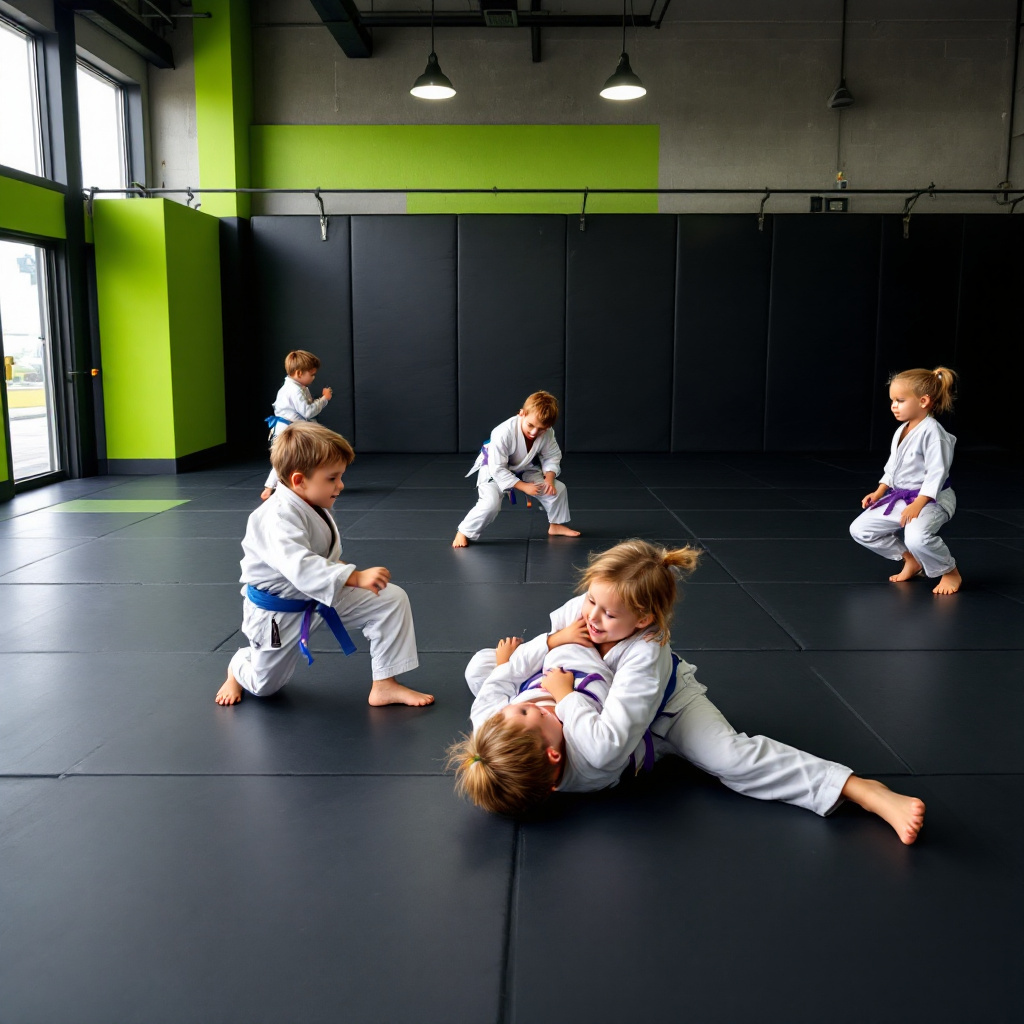
What Our Students Say — ⭐ 4.8 average rating from 908 Google reviews across all Monarchy MMA locations
★★★★★
“My 6 year old sons have been going for the boxing class here for the last 1 year. The coaches are firm and friendly especially coach Taina who’s great at explaining and making the classes enjoyable for children.”
— Chandani