
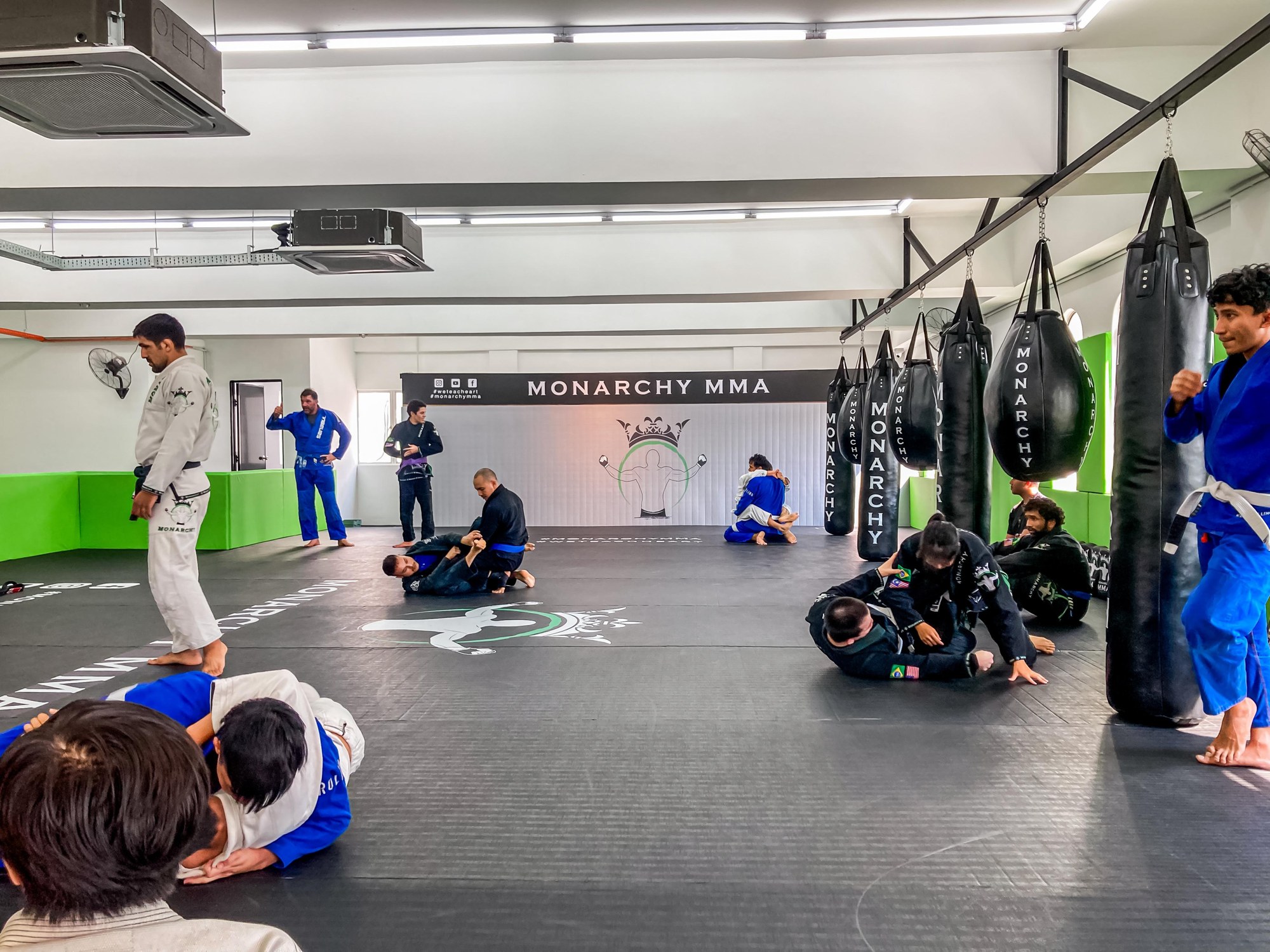
In the evolving world of Brazilian Jiu-Jitsu, mastering the intricacies of the De la Riva guard can set you apart from your peers, transforming your grappling game to new heights. Known for its versatility and control, the De la Riva guard is a favorite among practitioners looking to dominate from the bottom position. Implementing this complex guard successfully takes more than just knowledge of the position—it demands strategy, finesse, and an understanding of its potential applications and counters.
Understanding the De la Riva Guard
The De la Riva guard, originally popularized by Ricardo de la Riva, involves one leg hooking around your opponent’s lead leg while gripping their sleeve or collar with your hands. This guard is particularly effective in both Gi and No-Gi scenarios, offering opportunities for sweeps, transitions, and even submissions. Understanding this position fundamentally alters your ability to control and manipulate opponents, making it a staple in competitive BJJ.
Origins of the De la Riva Guard
Developed in the late 20th century, the De la Riva guard emerged from the innovative approach of Ricardo de la Riva who used his unique body type and flexibility to counter larger opponents effectively. The position was initially mocked as a mere experimentation, but it quickly asserted itself as a powerful tool within the BJJ community.
Position Mechanics
The De la Riva guard emphasizes using leverage rather than brute strength. By maneuvering your opponent’s balance and disrupting their base, you can execute sweeps that transition you to dominant positions like the back or mount. Understanding the biomechanics of how your hooks and grips influence your opponent is crucial in maximizing the guard’s effectiveness.
Techniques to Enhance Your De la Riva Guard
If you’re looking to elevate your BJJ game with the De la Riva guard, focusing on a few key techniques can make a significant difference.
The De la Riva Berimbolo
One of the most renowned techniques stemming from the De la Riva guard is the Berimbolo. This involves inverting your body while maintaining control of your opponent’s leg, leading you into a position from which you can take the back. The complexity and effectiveness of the Berimbolo have seen it become a favorite move at competitive levels.
Transitioning to X-guard
The transition from De la Riva to X-guard can offer a strategic advantage against savvy opponents. By switching to X-guard, you gain additional control and the potential for stronger sweeps while maintaining safety against passes.
Common Mistakes and Fixes in the De la Riva Guard
It’s easy to fall into common pitfalls when first utilizing this guard. Being aware of these mistakes can greatly increase your success rate when employing the De la Riva.

| Mistake | Correct Form |
|---|---|
| Loose grips | Ensure a firm grip on either the collar or sleeve to maintain control. |
| Ineffective hooks | Keep your hooking leg active, pushing into the opponent’s knee to disrupt their base. |
| Poor angle | Adjust your hip angle to always face the opponent, enhancing leverage. |
| Overreaching for leg grips | Maintain closeness to the opponent to avoid losing control. |
Practical Adjustments
When your opponent breaks your initial grips, it’s important to remain calm and re-establish control using your legs and hips. Practicing this adjustment repeatedly in live rolling sessions at Monarchy MMA will build instinctual reactions.
Building a Strategic De la Riva Game
Every guard player should aim to develop a personalized strategy around their De la Riva guard that suits their strengths while mitigating potential threats.
Tailoring Your Strategy
It’s important to tailor your training to fit your physiological attributes and style. Taller practitioners might leverage the control aspect through longer limbs, whereas more compact fighters could emphasize quick repositioning to create openings for transitions.
Incorporating Drills into Training
Incorporate specific drills that emphasize aspects of the De la Riva guard pertinent to your game. At Monarchy MMA, our instructors develop programs that are adjustable to your skill level, whether you are just dipping your toes into BJJ or preparing for a competition. This adaptability ensures constant progression and skill refinement.
For those looking to deepen their understanding of the financial and emotional sacrifices that can refine your dedication to BJJ, BJJ.ee’s insightful article covers this in detail.
Key Takeaways
- The De la Riva guard offers versatile control for sweeps and submissions.
- Focus on firm grips and active hooks to disrupt your opponent’s balance.
- Common mistakes include loose grips and ineffective angles—practice adjustments.
- Incorporating Berimbolo can add depth to your attack from De la Riva.
- Training at Monarchy MMA ensures guided progression and skill development.
FAQ
Why should I focus on the De la Riva guard as a beginner?
Understanding and mastering the De la Riva guard can provide a strong foundation for controlling opponents and opening avenues to effective sweeps and transitions. It is a versatile tool that is especially useful in competitive scenarios.
How does the De la Riva guard differ from other guards in BJJ?
The De la Riva guard is unique in its use of an outside hook to control the opponent’s leg, allowing for a variety of sweeps and submission pathways typical in Gi and No-Gi matches.
Is the De la Riva guard effective in No-Gi Jiu-Jitsu?
Yes, while the absence of gi grips changes some dynamics, the principles of leverage and control remain applicable in No-Gi scenarios, making the De la Riva guard an effective position to learn.
What are some essential drills for improving my De la Riva guard?
Focus on drills that enhance your grip strength, flexibility for inversions, and transitions to and from the X-guard. Partner drills are particularly effective for practicing the Berimbolo and sweeps.
Can I practice the De la Riva guard independently?
While solo drills can improve specific aspects like inversions and flexibility, practical application with a partner is essential for realistic scenario training, something you’ll find regularly at Monarchy MMA classes.
By integrating these insights and resources into your training routine, you can effectively elevate your De la Riva guard game. Whether you’re new to BJJ or preparing for a tournament, Monarchy MMA offers the perfect environment for honing these skills across Kuala Lumpur’s vibrant martial arts community.
What Our Students Say — ⭐ 4.8 average rating from 879 Google reviews across all Monarchy MMA locations
★★★★★
“As a tourist coming just for a vacation I really enjoyed this and shoutout to the coach that was treating and coaching everyone equally and improving our technic.”
— Lyamani