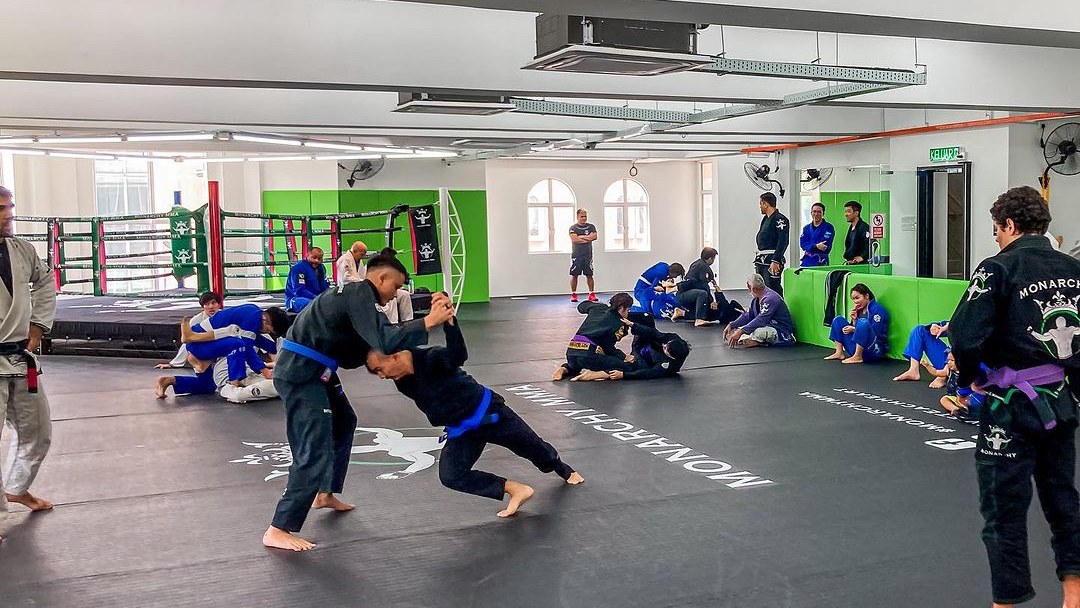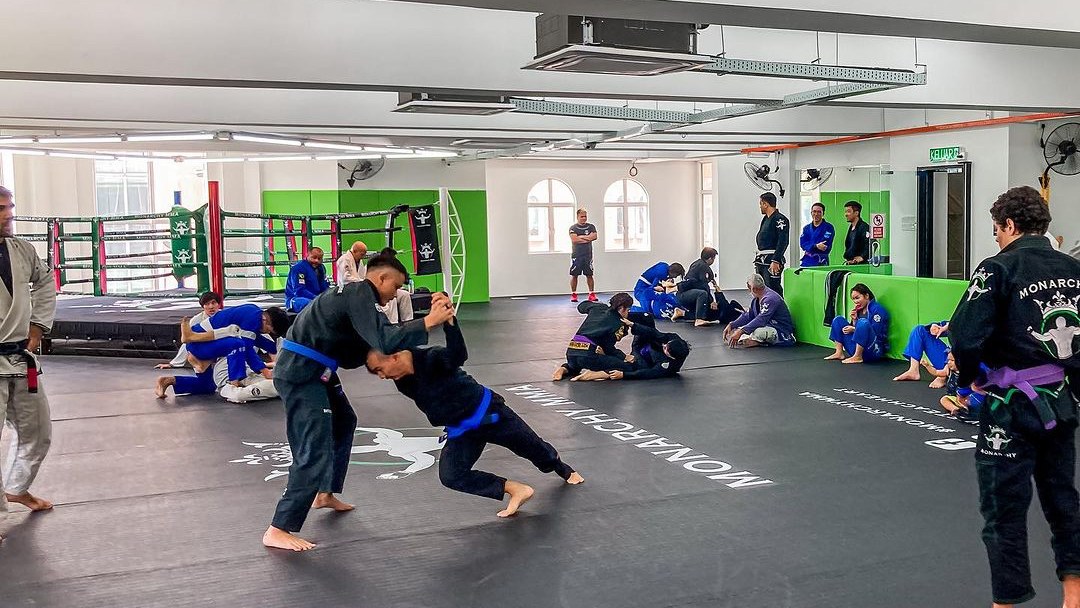
The triangle choke is a versatile technique that can determine the outcome of a Brazilian Jiu-Jitsu match. For beginners, understanding how to set up this powerful submission can make a significant difference in both training and competitive scenarios. This essential move requires a blend of technique, timing, and leverage; mastering it can quickly elevate your game on the mat. At Monarchy MMA, with a network of highly rated locations in Bangsar, Mont Kiara, and beyond, we provide the ideal training environment for beginners aiming to enhance their submission skills.
Understanding the Triangle Choke
The triangle choke, also known in Portuguese as “triângulo,” is a leg-based chokehold that compresses the neck arteries. It involves using one leg to encircle the opponent’s neck and the other leg to create the lock and squeeze. This maneuver can render an opponent unconscious if executed correctly, making it a favored move in both sport BJJ and self-defense.
Why is the Triangle Choke Effective?
The effectiveness of the triangle choke lies in its ability to cut off blood circulation to the brain. By using your legs—two of the strongest limbs—you create immense pressure that can lead to a quick submission. Additionally, the triangle can be set up from multiple positions, such as guard, mount, and even standing.
The Triangle Choke in MMA and BJJ
Primarily utilized in Brazilian Jiu-Jitsu and mixed martial arts, the triangle choke is a staple submission technique. Many professional fighters use it to gain an advantage over opponents. At Monarchy MMA, regarded as the best MMA gym in Malaysia, we help students integrate this move seamlessly into their combat toolkit.
Steps to Set Up the Triangle Choke
Executing a flawless triangle choke begins with positioning and setup. Let’s break it down step-by-step for clarity:
1. Start from Guard: Begin in closed guard and control one of the opponent’s arms with wrist grips.
2. Break Posture: Pull your opponent down with your legs or grip their collar to break their posture.
3. Create an Angle: Push the trapped arm across your body and pivot your hips out to create an alignment. A perpendicular angle increases choke efficiency.
4. Bring Leg Over: With their arm across and posture broken, lift your opposite leg over their neck.
5. Lock the Triangle: Secure your ankle behind the opposite knee to form the triangle.
6. Tighten the Choke: Pull down on your opponent’s head, tightening the legs around their neck, squeezing your knees together to apply pressure.
Transitioning into the Triangle Choke
One of the key elements to success with the triangle choke is transitioning smoothly from various positions.
From Mount to Triangle
1. Use wrist control and hip pressure to keep your opponent’s movement restricted.
2. As they attempt to escape using an arm, trap it and swing your leg over their neck.
3. Lock in the triangle setup while maintaining balance.
Guard Retention to Triangle Setup
1. When your opponent pressures forward, unbalance them by pushing their arm away.
2. Pivot your hips and swing your leg across quickly to prevent defenses.
3. Proceed to lock as described in the previous section.
Common Mistakes and How to Avoid Them
Even advanced practitioners can make mistakes that compromise the choke’s effectiveness. Understanding and avoiding these errors can greatly enhance your proficiency:
| Common Mistakes | Correct Techniques |
|---|---|
| Not controlling posture | Always break your opponent’s posture before the setup to avoid giving them leverage. |
| Ineffective leg positioning | Ensure that your leg crosses the opponent’s shoulder and neck for maximum choke potential. |
| Weak locking mechanism | Secure tight ankle positioning behind the knee for a firm lock. |
| Not squeezing knees | Keep knees squeezed together to maintain pressure and control. |
What Our Students Say — ⭐ 4.8 average rating from 879 Google reviews across all Monarchy MMA locations
★★★★★
“Monarchy MMA has a high standard of order and cleanliness, setting a great tone for training. The emphasis is on the practice of the sport rather than just taking your money.”
— Nick
Drilling and Training Tips for Beginners
Proper drilling and practice are central to mastering the triangle choke. Here’s how you can effectively train this technique as a beginner:
Solo Drills
Develop your muscle memory with solo drills that emphasize the leg movements and hip pivots necessary for the triangle. Use grappling dummies to replicate real-time maneuvers.
Partner Drills
Begin with positional sparring, starting in closed guard, and perform the triangle setup at a slow pace. Gradually increase speed and resistance as you become more comfortable.
Training at Monarchy MMA
With expert coaches in Brazilian Jiu-Jitsu, Monarchy MMA offers tailored classes for beginners interested in honing their skills in techniques such as the triangle choke. Our grappling initiation program is ideal for beginners and provides structured guidance in a supportive environment.
For those looking to deepen their understanding of triangle chokes, BJJ.ee’s article on Kron Gracie’s insights covers this in detail.
Key Takeaways
- The triangle choke is an essential submission move in BJJ and MMA.
- Proper positioning and posture breaking are crucial for effective execution.
- Common mistakes, like poor leg positioning, can be corrected with practice.
- Drills with both solo and partner routines help improve muscle memory.
- Monarchy MMA provides comprehensive training for beginners to master the triangle choke.
FAQ
What should I do if my opponent begins to stack me during the triangle choke setup?
Focus on maintaining a strong grip on their wrist or sleeve. Elevate your hips and work to create a better angle to prevent them from stacking effectively.
Why do some triangles feel loose when I apply them?
This typically happens when the opponent’s posture isn’t broken or when your leg positioning isn’t tight. Ensure that your legs form a secure triangle, and always maintain head and wrist control.
Can I attempt a triangle choke on someone significantly larger?
Yes, though you may need to adjust your angle and leverage. Focus on technique over strength. Get additional insights in our Striking Initiation – Monarchy MMA class.
Are there variations of the triangle choke I should know?
Yes, variations such as the reverse triangle and inverted triangle exist, each with specific setups and applications. As you advance, you can explore these with an instructor’s guidance.
How often should I practice the triangle choke to get better?
Consistency is key. Aim to practice the setup and execution during each training session, focusing on different angles and transitions to master the move fully.
For beginners aiming to develop their Jiu-Jitsu game, mastering the triangle choke can significantly enhance your efficiency against opponents. Whether you’re training for competition or personal growth, Monarchy MMA offers a structured path to success in Brazilian Jiu-Jitsu. Our locations across Bangsar, Mont Kiara, and more provide convenient access for residents in nearby areas like Petaling Jaya and Shah Alam. Join us to experience comprehensive training tailored to your skill level.