
Preparing for a martial arts tournament can feel overwhelming. You train hard, but doubt creeps in about whether you’re doing enough mentally and physically. Many competitors in Kuala Lumpur struggle to balance technical drills, conditioning, and mental toughness effectively. This guide provides proven strategies to optimise your preparation for upcoming 2026 tournaments, covering everything from structured training plans to pre-fight routines. You’ll discover how to build comprehensive readiness that transforms competition anxiety into confident performance.
Table of Contents
- Understanding The Mental And Physical Demands Of Martial Arts Competition
- Creating An Effective Training Plan For Competition Preparation
- Optimising Your Pre-Competition Routine And Warm-Up
- Avoiding Common Mistakes And Ensuring Recovery After Competition
- Train Effectively With Expert Martial Arts Classes In Kuala Lumpur
Key takeaways
| Point | Details |
|---|---|
| Balance is essential | Effective preparation requires integrating both mental conditioning and physical training rather than focusing on one aspect alone. |
| Start early | Begin your focused competition preparation 6 to 8 weeks before your tournament to allow proper progression and recovery. |
| Warm-up matters | Dynamic warm-up routines combining sport-specific drills significantly reduce injury risk and boost immediate performance. |
| Recovery prevents burnout | Post-competition recovery protocols are crucial for maintaining long-term progress and preventing injuries across multiple tournaments. |
Understanding the mental and physical demands of martial arts competition
Martial arts competitions demand far more than raw power or technical skill alone. You need exceptional endurance to maintain intensity through multiple rounds, explosive strength for decisive strikes or takedowns, speed to capitalise on openings, and refined technique executed under extreme pressure. These physical requirements intensify dramatically when fatigue sets in during later bouts.
The psychological challenges prove equally demanding. You must maintain razor-sharp focus whilst managing pre-fight anxiety, adapt strategies mid-bout based on your opponent’s actions, and push through discomfort when your body screams to stop. Mental fatigue compounds physical exhaustion uniquely during tournaments, where you might face several fights in one day. Understanding these combined demands allows you to target preparation effectively rather than training blindly.
Mental toughness and physical conditioning are both critical factors for competitive success in martial arts tournaments.
Successful competitors recognise that strength and conditioning directly impacts fight outcomes. Consider these essential preparation elements:
- Cardiovascular endurance for sustained high-intensity output
- Mental resilience techniques including visualisation and stress management
- Technical precision maintained under physical and psychological pressure
- Strategic thinking capabilities during the chaos of competition
- Recovery protocols to handle multiple bouts effectively
Incorporating mental conditioning like visualisation exercises helps you rehearse scenarios before stepping onto the mat. Stress management techniques, including controlled breathing and mindfulness practices, enable you to channel nervous energy productively. Physical preparation without mental fortitude leaves you vulnerable when unexpected challenges arise during competition.
Creating an effective training plan for competition preparation
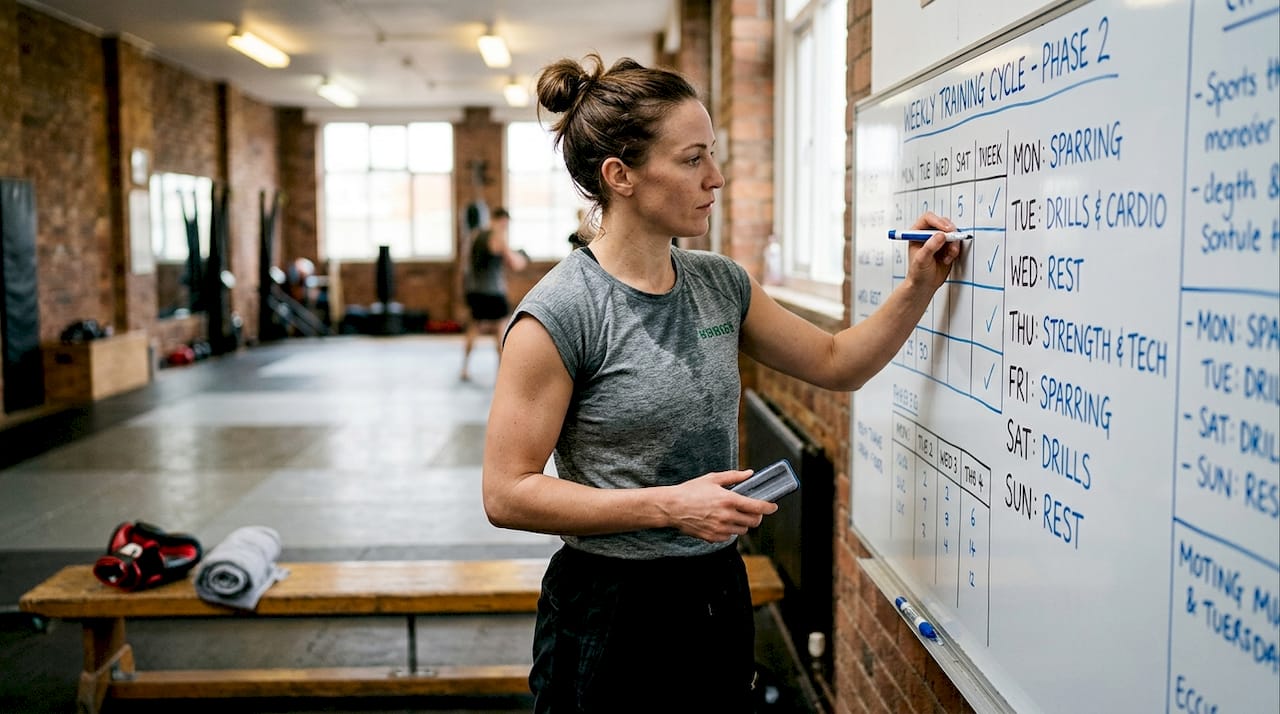
Building a structured training plan transforms vague preparation into measurable progress. Start your focused preparation 6 to 8 weeks before your competition date, allowing sufficient time for progressive intensity increases without risking overtraining. This timeline provides adequate adaptation whilst maintaining peak performance timing.
Your training plan must address multiple dimensions simultaneously. Strength and conditioning routines significantly improve martial arts competition readiness by building the physical foundation your technique requires. Include strength work for power generation, endurance training for sustained output, flexibility exercises to prevent injuries, and skill-specific drills that sharpen your technical arsenal. Mental training deserves equal priority through meditation sessions, visualisation practice, and developing coping strategies for competition stress.
| Week | Primary Focus | Duration | Intensity |
|---|---|---|---|
| 1-2 | Base building, technique refinement | 60-75 minutes | Moderate |
| 3-4 | Strength and power development | 75-90 minutes | High |
| 5-6 | Competition-specific conditioning | 60-90 minutes | Very high |
| 7 | Tapering and mental preparation | 45-60 minutes | Moderate |
| 8 | Final sharpening and rest | 30-45 minutes | Light |
Follow these steps to construct your personalised preparation programme:
- Assess your current fitness level and technical proficiency honestly to identify specific weaknesses requiring attention.
- Define clear, measurable goals for each training phase, such as improving round endurance or perfecting specific techniques under fatigue.
- Schedule training sessions balancing hard work with adequate recovery, typically 4 to 6 sessions weekly depending on intensity.
- Incorporate conditioning for martial arts that mirrors competition demands, including interval training and sport-specific drills.
- Build mental training into your routine through daily visualisation and weekly stress management practice.
- Monitor progress through training logs, tracking both physical metrics and subjective readiness indicators.
- Adjust your plan dynamically based on recovery signals, avoiding rigid adherence when your body needs modification.
Pro Tip: Track your resting heart rate each morning as an objective recovery indicator. Elevated readings suggest inadequate recovery, signalling you to reduce training intensity before overtraining occurs.
Schedule rest days strategically to allow muscular repair and nervous system recovery. Overtraining sabotages preparation more effectively than undertraining, as accumulated fatigue degrades both physical performance and mental sharpness. Include at least one complete rest day weekly, with additional active recovery sessions using light movement to promote circulation without adding training stress.
Optimising your pre-competition routine and warm-up
Your immediate pre-competition preparation determines whether months of training translate into optimal performance. The hours before stepping onto the mat require careful management of physical warm-up, nutrition timing, hydration, and mental priming. Small mistakes during this critical window can undermine extensive preparation.
Your warm-up should combine dynamic stretches that increase range of motion, sport-specific drills that activate relevant movement patterns, and gradual intensity buildup that prepares your cardiovascular system. Optimal warm-up routines reduce injury risk and improve immediate performance in martial arts competitions by ensuring your body reaches peak readiness exactly when needed.
| Warm-up Type | Benefits | Drawbacks | Best Timing |
|---|---|---|---|
| Dynamic stretching | Increases mobility, activates muscles, improves blood flow | Requires proper technique knowledge | 15-20 minutes pre-fight |
| Static stretching | Improves flexibility long-term | Temporarily reduces power output | Avoid immediately before competition |
| Sport-specific drills | Activates exact movement patterns, builds confidence | Can cause fatigue if overdone | 10-15 minutes pre-fight |
| Light sparring | Sharpens timing and reactions | Risk of minor injury or excessive fatigue | 20-30 minutes pre-fight |
Hydration and nutrition timing prove crucial for maintaining energy levels throughout competition day. Consume your last substantial meal 3 to 4 hours before your first bout, focusing on easily digestible carbohydrates and moderate protein. Avoid heavy fats or unfamiliar foods that might cause digestive discomfort. Sip water consistently leading up to competition, but stop heavy fluid intake 30 minutes before fighting to prevent stomach sloshing.
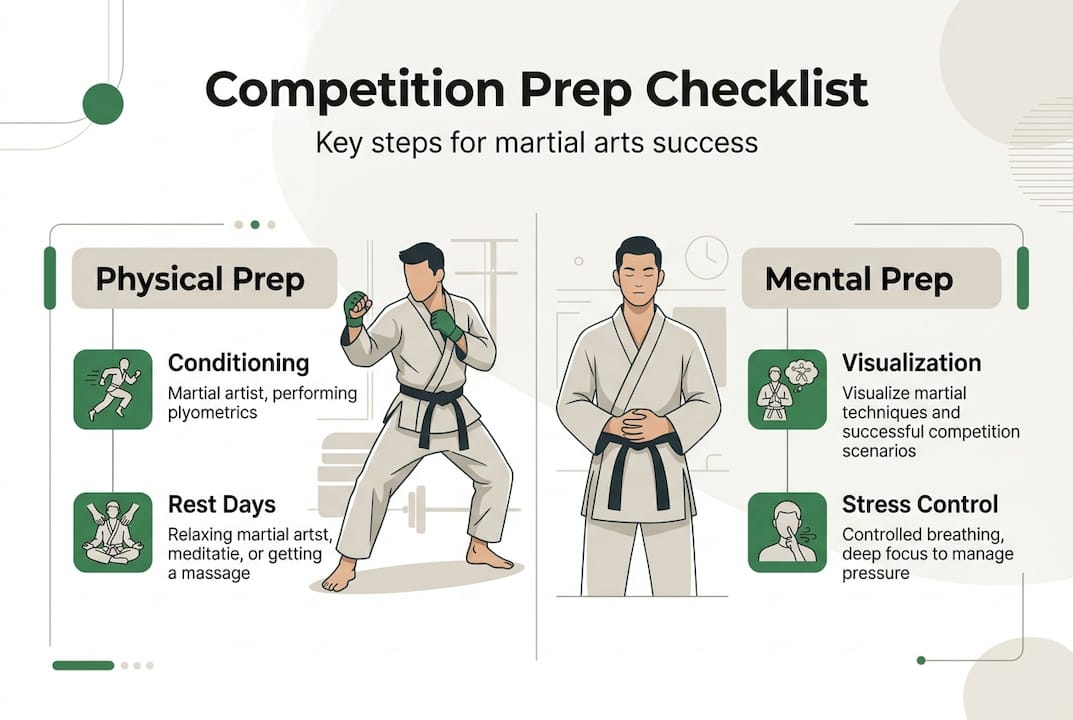
Pre-competition mental preparation techniques help channel nervous energy productively. Practise controlled breathing exercises to manage anxiety, using box breathing with 4-second inhales, holds, exhales, and pauses. Visualise yourself executing techniques successfully, feeling the movements and experiencing positive outcomes. This mental rehearsal activates similar neural pathways as physical practice, priming your brain for actual performance.
Complete these quick checks before your martial arts competition bout:
- Verify all required gear is present and properly fitted
- Confirm your bracket position and estimated fight time
- Complete your dynamic warm-up sequence
- Perform final mental visualisation of your game plan
- Check hydration status and consume water if needed
- Execute calming breathing exercises to centre focus
Pro Tip: Time your warm-up to finish 5 to 10 minutes before stepping onto the mat. This window maintains elevated body temperature and neural activation whilst allowing brief recovery from warm-up exertion, ensuring you enter the fight energised rather than fatigued.
Avoiding common mistakes and ensuring recovery after competition
Many martial artists sabotage their preparation through preventable errors. Recognising these pitfalls helps you avoid undermining your hard work. The most frequent mistake involves neglecting adequate rest, driven by the misconception that more training always produces better results. Insufficient recovery degrades performance, increases injury risk, and can lead to overtraining syndrome that requires weeks to resolve.
Poor nutrition represents another critical error. Your body cannot adapt to training stress without proper fuel and building materials. Inadequate protein intake limits muscle repair, insufficient carbohydrates deplete energy stores, and poor micronutrient consumption impairs recovery processes. Nutrition quality matters as much as training quality for competition readiness.
Inadequate mental preparation leaves you vulnerable when competition pressure peaks. Physical readiness means nothing if anxiety overwhelms your ability to execute techniques or strategic thinking collapses under stress. Mental training deserves dedicated practice time, not just hopeful assumptions that you’ll handle pressure naturally.
Follow these post-competition recovery steps to maintain long-term progress:
- Complete a proper cooldown immediately after your final bout, including light movement and gentle stretching to begin the recovery process.
- Rehydrate systematically over several hours rather than consuming massive amounts immediately, which can cause digestive distress.
- Consume a recovery meal within 90 minutes containing both protein for muscle repair and carbohydrates to replenish depleted glycogen stores.
- Prioritise quality sleep for at least two nights following competition, as this provides the primary recovery and adaptation stimulus.
- Schedule active recovery sessions using light movement to promote circulation without adding training stress during the first week post-competition.
- Reflect objectively on your performance, identifying both successes to reinforce and areas requiring improvement for future preparation cycles.
Injury prevention requires consistent attention to multiple factors. Implement these protective measures:
- Master proper technique through quality instruction rather than rushing progression, as common mistakes often stem from technical deficiencies
- Wear all recommended protective equipment without exception, regardless of perceived toughness
- Listen to your body’s signals, distinguishing normal training discomfort from pain indicating potential injury
- Address minor issues immediately before they progress into serious problems requiring extended time away from training
- Maintain balanced training that develops all physical qualities rather than overemphasising single attributes
Stress management prevents burnout during competitive seasons. Competition creates significant psychological demands beyond training stress. Build recovery periods into your annual plan, allowing mental refreshment between tournament cycles. Engage in activities outside martial arts that provide enjoyment without performance pressure. Maintain perspective by remembering that competitions represent opportunities for growth rather than defining your worth as a person.
Gradual return to training post-competition allows proper recovery whilst maintaining fitness. Avoid immediately jumping into intense preparation for the next tournament. Take at least one week at reduced intensity, then rebuild training loads progressively. This approach prevents accumulated fatigue across multiple competition cycles whilst maintaining long-term development trajectory.
Train effectively with expert martial arts classes in Kuala Lumpur
Applying these competition preparation strategies becomes significantly easier with expert guidance and structured training environments. Monarchy MMA offers comprehensive adult martial arts classes in Kuala Lumpur specifically designed to develop both the physical conditioning and technical skills essential for tournament success. Our experienced coaches understand the unique demands of competition preparation and provide personalised guidance that accelerates your progress.
Whether you need focused attention through martial arts private lessons or prefer the motivation of group training, our programmes address every aspect of competition readiness. Our conditioning for martial arts training ensures you build the physical foundation required for peak performance under pressure. Experience our training approach first-hand through a free trial session and discover how expert instruction transforms preparation effectiveness.
FAQ
How long should I prepare for a martial arts competition?
Typically, a 6 to 8 week focused training plan provides effective preparation for martial arts competitions, allowing proper development of both physical conditioning and mental readiness. This timeline balances adequate adaptation to training stress with maintaining peak performance timing. Starting earlier than 8 weeks risks losing sharpness, whilst shorter preparation periods may not allow sufficient conditioning development.
What are essential elements of a competition day warm-up?
Dynamic stretches, sport-specific drills, proper hydration, and mental focus exercises form the essential components of an optimal pre-competition warm-up. Begin 15 to 20 minutes before your bout with dynamic movements that increase range of motion and activate relevant muscle groups. Avoid static stretching immediately before competing, as research demonstrates this temporarily reduces power output and explosive performance.
How can I prevent injuries during martial arts competitions?
Use proper technique consistently, wear all recommended protective gear, listen carefully to your body’s signals, and ensure adequate rest and nutrition to minimise injury risk during competition. Avoid overtraining in the weeks leading up to tournaments and never rush into fights without completing appropriate warm-up protocols. Address any minor discomfort immediately rather than pushing through pain that might indicate developing injury.
What mental strategies improve martial arts competition performance?
Techniques including visualisation, controlled breathing exercises, positive self-talk, and mindfulness practices significantly enhance performance under competition pressure. Mental rehearsal prepares you effectively for various fight scenarios by activating similar neural pathways as physical practice. Develop these skills through consistent practice during training rather than attempting to implement them for the first time during actual competition.